After a devastating accident, and a pandemic that derailed her recovery, this O’ahu woman chose movement, connection, and joy.
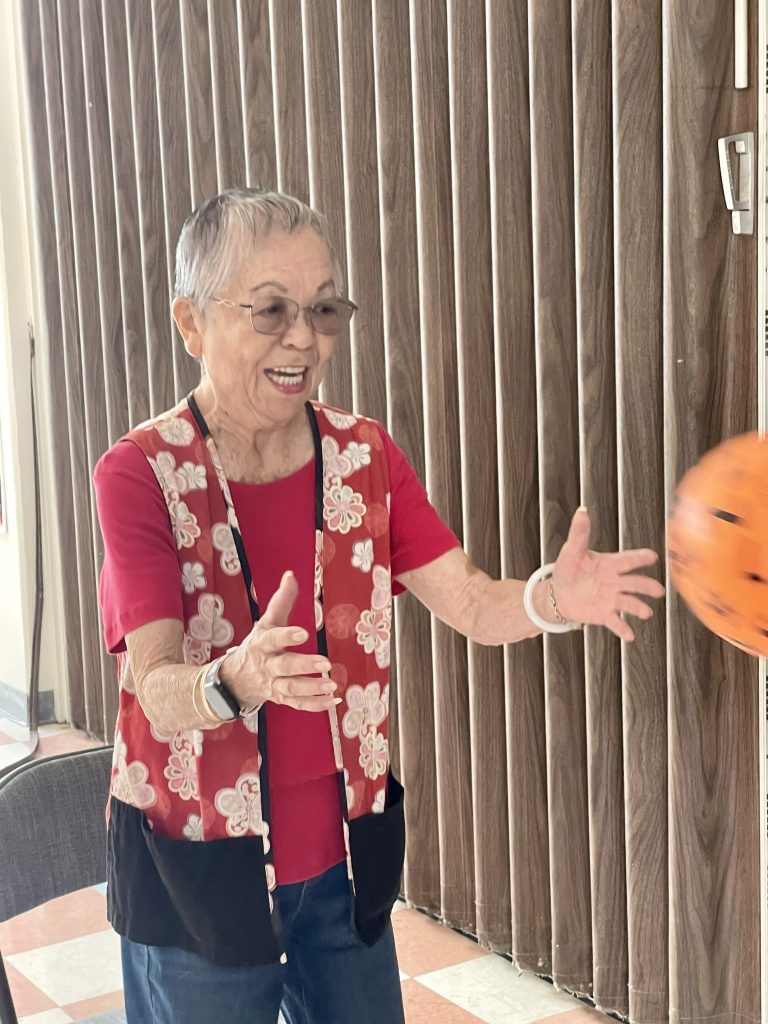
There is a garden on O’ahu that makes strangers stop walking. Passersby slow down, lean in, and linger. They are drawn by the orchids, the vegetables, the flowers so carefully tended that you can’t help but to stop and admire. That garden belongs to Joyce Fujimoto and her husband Richard. And like Joyce herself, it is a testament to what happens when you simply refuse to give up.
Joyce is 83 years old, of Okinawan descent, and living proof that resilience is not a personality trait you’re born with. It’s something you practice, day after day, often in spite of tremendous pain.
In 2019, Joyce traveled to San Francisco for the World Buddhist Women’s Convention, a gathering that takes place just once every four years. On her way home to Hawai’i, while waiting at the luggage carousel, another passenger rushed to grab his suitcase. It swung. In one careless moment, Joyce was knocked backwards and left with a fractured left leg, dislocated jaw, and several teeth cracked or missing.
The physical toll was immense. Surgeons placed a titanium rod in her leg, which now occasionally raises flags at TSA checkpoints. Its shape inside her hip socket, she laughs, looks suspiciously like a rifle on the scanner. But what truly broke Joyce’s heart was something smaller, quieter.
“I used to whistle to attract birds to my garden. I learned it from my grandfather. After the accident, I couldn’t anymore. That still makes me sad.”
She couldn’t laugh, couldn’t whistle, couldn’t sing. The accident stole small joys she had never thought to count until they were gone.
|
|
Then COVID arrived. Rehabilitation hospitals pivoted to handle the surge of patients. Joyce was sent home before she was ready. She was unable to climb the stairs in her home, and she was cut off from the in-person therapy her recovery needed. Online sessions filled the gap inadequately. She never fully healed.
Pain became a constant companion. But rather than surrender to it, Joyce listened to her doctor’s straightforward advice: walk. So she walks. She rises before the sun for an early morning walk. She also walks a mile down the hill to do her shopping, cane in hand on uneven ground or when the wind picks up.
“If I wasn’t moving, I would be in more pain.”
Her doctor once shared a piece of wisdom that has stayed with her through everything: if you take care of the land, the land will take care of you. Joyce has lived that truth in her garden and in her body; tending both with the same patient, steady devotion.
|
|
What does brain-healthy living actually look like? For Joyce, it looks like an early morning sunrise walk. It looks like ukulele chords drifting across a park in Waikele. It looks like a Mahjong tile clicked down on a table at the senior center on a Tuesday morning, after waking at 4 a.m. to get ready.
Joyce’s weekly routine touches every pillar of brain health, not by design, but by instinct.
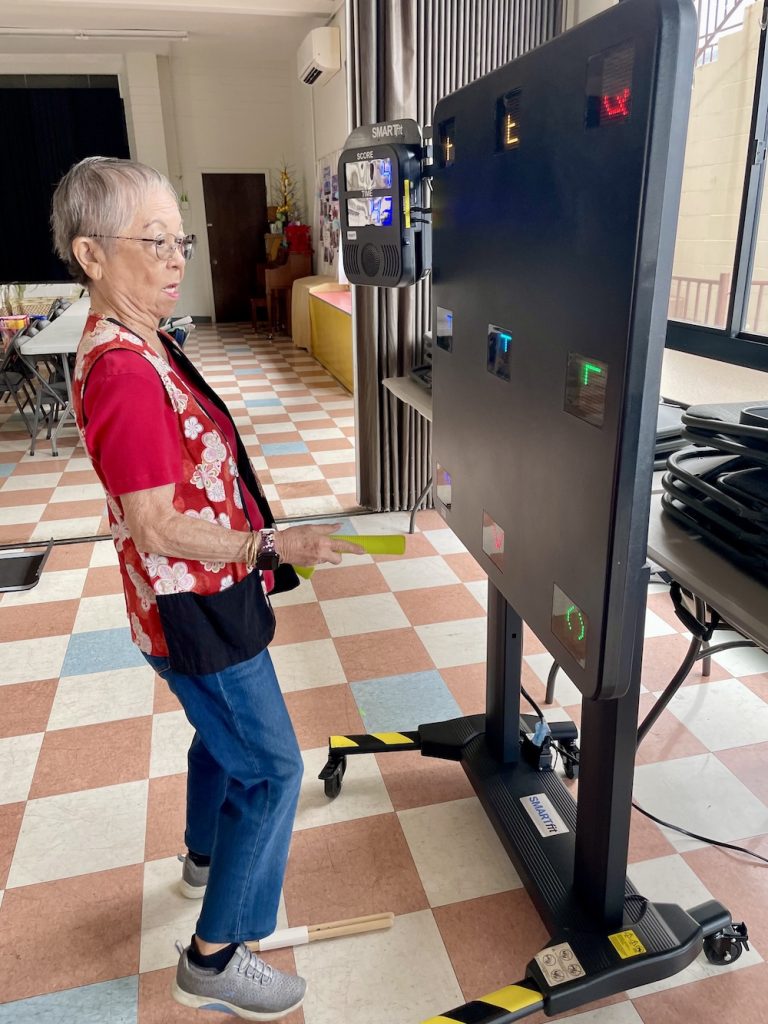
On Tuesdays and Thursdays, Joyce attends brain matters’ Brain Power class at Mo’ili’ili Hongwanji Temple. “The Brain Power class works on my mind and body,” she explains. “I’ve never done the activities before. I really enjoy the class, and I’m using muscles I don’t normally use, so I’m getting tremendous benefit.”
Wednesdays find her in Waikele, where she meets friends for a 45-minute walk through the park before settling in to play ukulele together. This summer, she’ll be teaching Mahjong – yet another way she’ll be engaging her brain.
Her kitchen reflects the same intention as her garden. Stir fries loaded with vegetables, and seasoned with anti-inflammatory turmeric and ginger. She still cooks some Okinawan recipes passed down through generations. For Joyce, food is medicine.
|
what Joyce wants you to know
|
Joyce is not out here running marathons. She uses a cane. She has a titanium rod in her leg. She lives with chronic pain. She has never fully recovered from an accident that happened in a busy airport when she was simply trying to come home.
And yet, she is out the door before sunrise. She is at the table, playing tiles. She is strumming chords in a park with friends.
Movement, for Joyce, is not a fitness goal. It’s a negotiation with pain, and a refusal to let pain win. Every step is a choice. Every ukulele lesson is a choice. Every hand of Mahjong is a choice to stay present, stay connected, stay sharp.
Her garden stops strangers in their tracks. So does she…if you’re paying attention.
take the Joyce challenge: add 500 steps today
|
Joyce walks a mile to the store with a titanium rod in her leg, using a cane. Pain is a constant companion. And yet she logs close to 10,000 steps on many days. You don’t have to match her. You just have to start. Here are a few easy ways to sneak more steps into your day:
- Park at the far end of the lot. Every row counts!
- Instead of sitting during commercials, get up and walk around the house
- Walk to a neighbor’s door instead of sending a text
- Add a 10-minute stroll after dinner. It benefits your blood sugar and your brain
- Walk while you talk: Take your next phone call on foot
Check your step count right now. Whatever your daily average is, add 500 steps tomorrow. Not 5,000. Just 500. Then do it again the next day. Joyce didn’t start at 10,000 steps. She started by walking out the front door.
|
|
|